UP RVA didn’t begin with systems and structure.
It began with students who needed rides, homework help, and someone who would keep showing up when things got complicated.
Over time, those well-intentioned efforts grew into something more organized — a program capable of supporting students year after year.
But in the early days, the organization was powered mostly by two things: deep care for students — and a lot of “yes.”
UP RVA founder Toby Desch often jokes about how it worked.
“I said yes to everything,” he says.
“And then Paul figured it out.”
For over a decade, Paul has been helping turn those well-intentioned “yeses” into the systems that now sustain the work.
Paul Bateera serves as UP RVA’s Chief Operations and Financial Officer and was the organization’s first full-time hire. Since 2016, he has helped shape the day-to-day operations that keep the program running and make sure students and families have what they need to succeed.
But his connection to the organization began even before there was a job to offer.
Showing Up Before the Job Existed
Paul first connected to UP RVA through Anna Julia Cooper School in 2015. At the time, he was volunteering in the mornings while also working in the afternoons at the Boys & Girls Clubs.
He met Toby and asked if there was a way to work with UP RVA.
There wasn’t funding yet.
But Paul didn’t walk away. He stayed close to the work, continued serving students, and kept showing up. When UP RVA was finally able to hire its first full-time staff member, Toby knew exactly who had already demonstrated the commitment the role required.
Paul didn’t just apply for a job.
He had already started doing the work.
Learning by Doing
Paul’s first day as a full-time employee set the tone for what those early years would look like.
There was no onboarding manual. No training period. No carefully structured transition.
Toby remembers it simply.
“On Paul’s first day, I basically said, ‘Run afterschool. Make sure everyone gets home.’ Then I left.”
Paul figured it out.
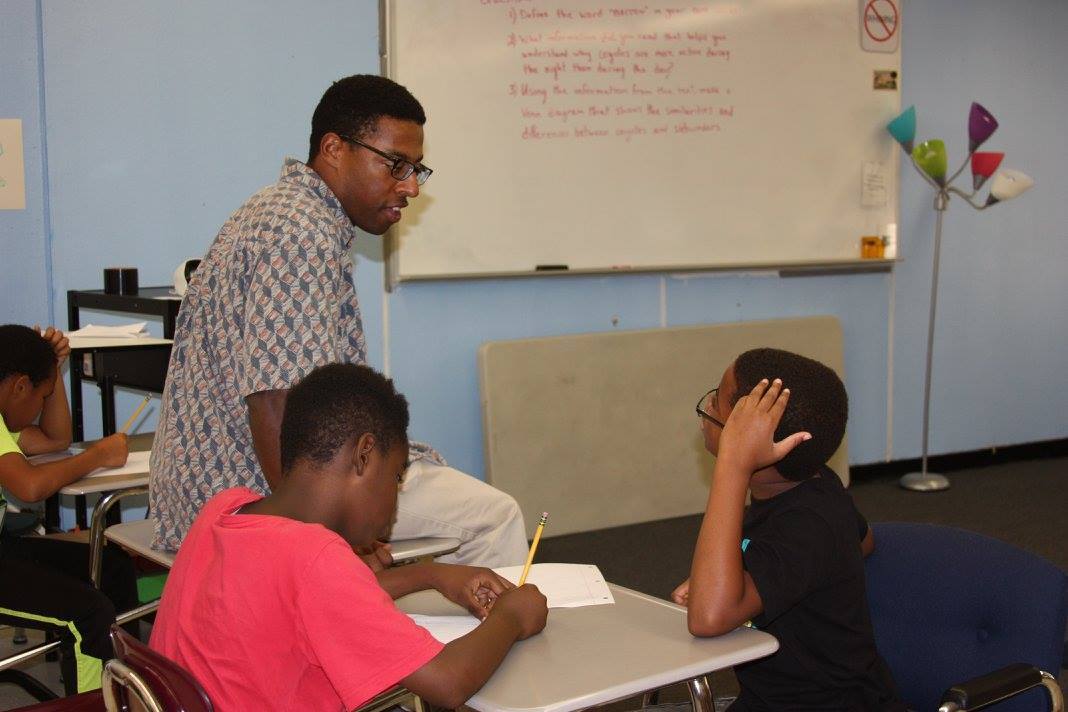
Afterschool programs ran from 4 to 8 p.m. multiple days each week. Students arrived from different schools with different academic expectations and needs. Some had hours of homework. Others just needed a safe place to land after school.
Every afternoon required flexibility, patience, and a willingness to solve problems in real time.
That was the rhythm of the early organization.
Turning Good Intentions into Systems
As UP RVA grew, so did the complexity of the work.
More students. More families. More moving parts. More responsibility.
The organization had always been fueled by good intentions and deep care for students. But to support more students well — and to support them over many years — those intentions needed stronger systems behind them.
Paul helped build them.
At one point, Toby handed over the responsibility for coordinating transportation — something that had previously been managed day-to-day through constant messages and improvisation.
His instructions to Paul were simple.
“Please make this better.”
Over time, Paul did exactly that.
Schedules became clearer. Processes became more dependable. The daily operations of the program grew more structured — not to remove the heart of the work, but to protect it.
Because when systems work well, staff can spend more time doing what matters most: supporting students.
The Backbone of the Work
Today, Paul describes his role as helping keep the organization healthy.
Much of what he does happens behind the scenes — coordinating operations, solving logistical challenges, managing financial realities, and making sure the organization can continue to deliver on its promises.
It’s not always the work people see first.
But it’s the work that allows everything else to function.
UP RVA has always been driven by well-intentioned people who care deeply about students and their futures. Over time, Paul has helped transform that care into something durable — an organization strong enough to keep showing up for students year after year.
And nearly a decade after he first asked for a job that didn’t yet exist, Paul remains one of the steady hands making sure the work keeps moving forward.