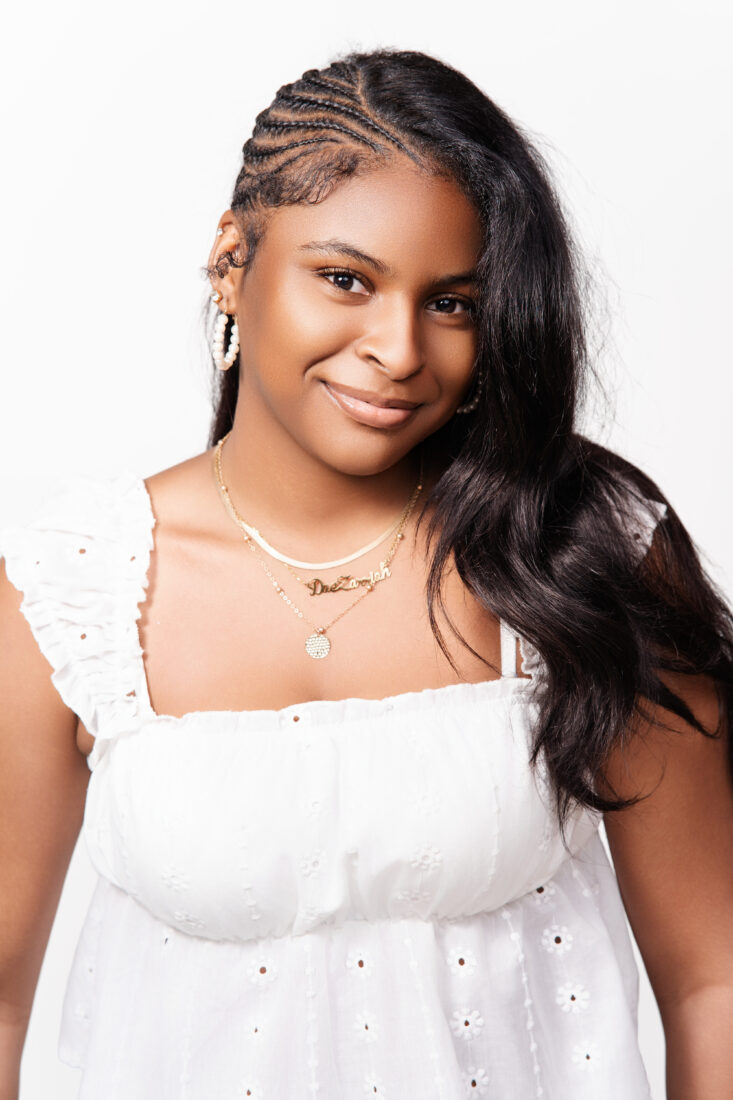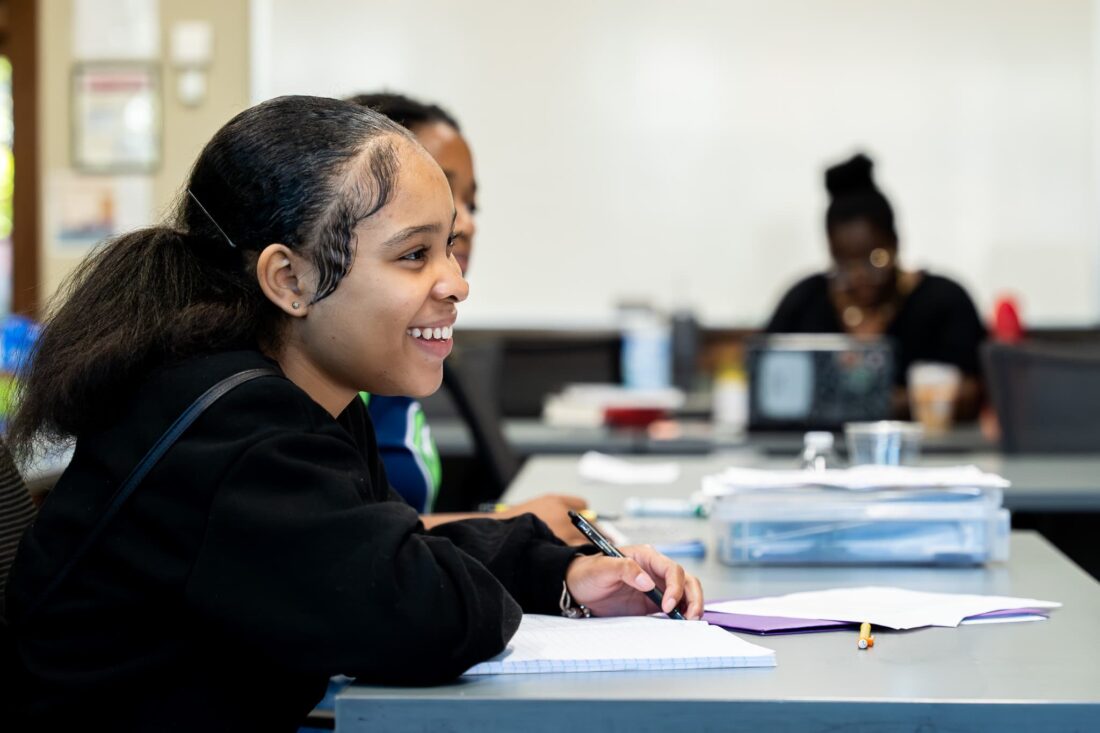
Dae’Zarriah doesn’t rush to be the loudest voice in the room — but when she speaks, people listen. Her teachers describe her as thoughtful, steady, and deeply engaged with her work.
This year, she wrote what one teacher called the most poignant personal response essay in the class and completed creative projects that were both visually striking and rich with meaning. Whether in English, Statistics, or Art, Dae’Zarriah shows up with care, curiosity, and a growing confidence in her own voice.
Here’s more of Dae’Zarriah’s story, in her own words.
What are your favorite subjects in school?
Probably African American History. I like going into depth about what actually happened, instead of just getting the basic overview like we do in some history classes.
What has been your favorite extracurricular activity in high school?
I enjoyed yoga during my sophomore year.
In what ways have you changed the most between the start of your 9th-grade year and now being in your final year of high school?
I’m 100% more social than I was. I didn’t really talk at all freshman year. At St. Catherine’s, there are so many presentations and so much public speaking — you really can’t get out of it, and that helped me a lot.
What has been the best part of attending St. Catherine‘s?
The community. It feels easy to talk with your classmates, teachers, and advisors.
What has been the most challenging thing about high school? Did UP RVA help you at all in overcoming that challenge? If so, how?
Definitely the workload. I wasn’t expecting high school to be so demanding. UP RVA helped a lot — with tutors, after-school support, essays, and reading over my work.
If you had to do it all over again, would you still be a part of UP RVA? Why?
Yes. I don’t think I would have been able to get through private school without the extra help — especially mentally and emotionally.
What are the 2 or 3 things you want people to know about how UP RVA helps its students?
There’s always someone to talk to. You always have support — with homework, with school, with everything.
-Dae’Zarriah Coles